
Edmonton
Best Edmonton Neighbourhoods for Newcomers to Live and Rent in 2026
Alberta
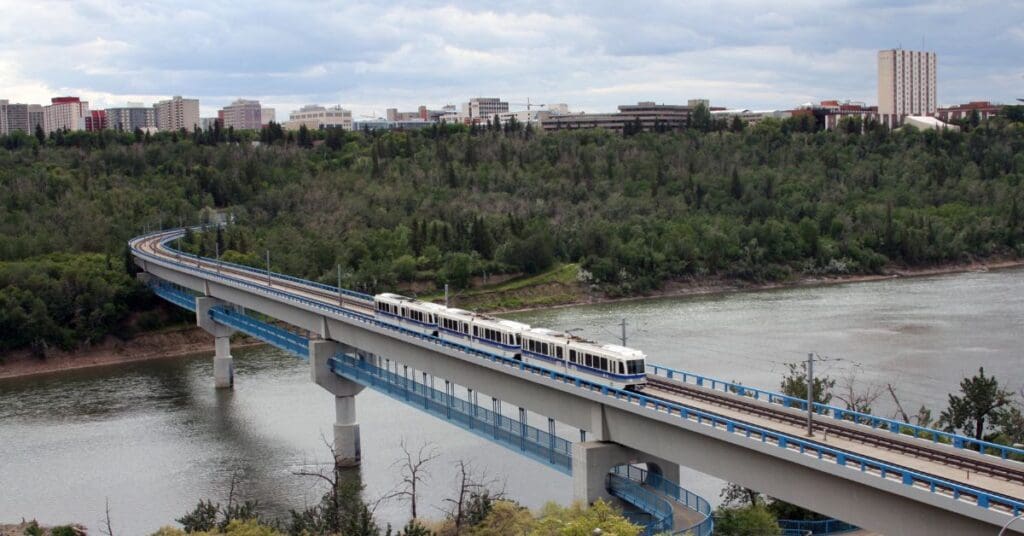
Transit System in Edmonton Moves You Affordably
Join the Scotiabank StartRight® Program designed for Newcomers‡ and get up to $2,300* in value in the first year.

Written By

Corinna Frattini
May 20, 2026
•Edmonton

Planning your move to Canada? Edmonton remains one of the most practical and rewarding choices for newcomers in 2026. As the “Value King” of Canada’s major cities, Edmonton offers a unique blend of high wages, affordable real estate, and a legendary festival culture. If you are researching whether Edmonton is the right fit for your move in 2026, this guide covers housing, jobs, and the unique lifestyle of Canada’s northernmost major city.
Before moving, it’s vital to research:
Doing this research will help you make informed decisions and start your life in Canada on the right foot.
| Metric | 2026 Data | Comparison Note |
|---|---|---|
| City Population | ~1.1 Million (City) / 1.5 Million (Metro) | 5th largest metro area in Canada |
| *Avg. 1-Bedroom Rent | $1,250 – $1,350 | -45% lower than Toronto |
| Benchmark Home Price | $465,200 | Highly accessible for first-time buyers |
| Top Industries | Tech, Health & Sustainable Energy | Hub for AI (Amii) and Hydrogen |
| Climate | Humid Continental | The “Sunniest City” in Canada. |
*While this is an average, the market moves fast. You can view live Edmonton rental listings right now at Rentals for Newcomers.
Edmonton is the provincial capital and the gateway to Canada’s north. Located in western Canada along the North Saskatchewan River, it’s known for open skies, four distinct seasons, and friendly communities. In 2026, the city successfully shifted its focus away from traditional oil and gas. Instead, it has become a major technology hub, often called the “Silicon Valley of the North”, with a strong focus on Artificial Intelligence (AI) and clean energy like green hydrogen.
Key Sectors: Biotechnology, Artificial Intelligence, Logistics, Healthcare, and Hydrogen Energy.
💡 Employment Trends: As of early 2026, Edmonton’s unemployment rate remains stable at 6.2%. The city is seeing a massive influx of tech talent relocating from high-cost coastal cities, drawn by the high “real” income (earnings vs. cost of living).
Newcomer Support: The Edmonton Mennonite Centre for Newcomers (EMCN) is the flagship agency for employment-focused integration.
💡 Tip: Read more about how to research your profession in our guide, Canada Job Bank: Your Vital Research Tool.
Edmonton is the “affordability champion” of 2026. While rent prices have increased due to high inter-provincial migration, you still get much more space for your dollar than in Ontario or British Columbia.
Edmonton continues to hold its ground as a primary affordability champion for families and young professionals. In fact, it is ranked as a top “Rising Star” in our updated look at the best cities in Canada for immigrants due to its unique balance of high average wages and low rent.
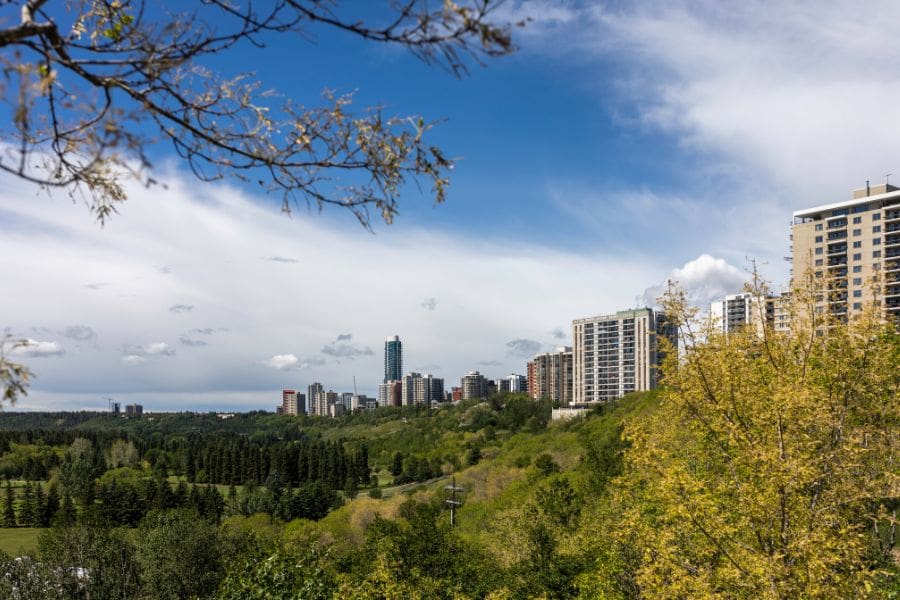
Renting is often the first step for newcomers. You’ll discover a range of unique communities and housing types to suit different budgets. To find a community tailored specifically to your family’s lifestyle, preferences, and transit needs, take a look at our complete breakdown of the Best Edmonton Neighbourhoods for Newcomers.
According to the Rentals for Newcomers 2026 Market Watch, city-wide rental rates reflect highly competitive, balanced conditions. While the overall city-wide average for a standard 1-bedroom unit hovers around $1,250 – $1,350, entering high-demand core districts or brand-new developments commands a premium. Conversely, searching for older walk-up apartments in established, family-centric areas like Mill Woods can offer substantial monthly savings, with prices often dropping closer to $1,150.
Here is a look at average rental expectations according to our current 2026 tracking:
| Neighbourhood | Avg. 1-Bedroom Rent | Vibe for Newcomers |
|---|---|---|
| Oliver / Downtown (View Downtown Edmonton Listings) | $1,550 | Urban: Walkable, near the river valley and nightlife |
| Strathcona (View Strathcona Listings) | $1,625 | Historic/Arty: Near the University of Alberta; trendy |
| Windermere | $1,500 | Suburban: Brand new builds, great for families with cars |
| Mill Woods (View Mill Woods Listings) | $1,325 | Community-focused: Established multicultural hub |
| Griesbach | $1,575 | Master-Planned: Premium community with heritage design, walking trails, and lakes; highly family-friendly |

💡Renting in Edmonton Tip: You’ll need tenant insurance to protect your belongings and most property owners will require it. Read more about why newcomers need tenant insurance.

If transitioning from renting to owning is your primary financial goal, timing your entry into the local market is key. According to Prepare for Canada’s 2026 Canadian Housing Outlook, Edmonton remains a primary affordability champion among Canada’s major metropolitan areas. Our market evaluation shows a highly active, “balanced” landscape where buyers hold real negotiating leverage.
To put Edmonton’s affordability into perspective, the national average Canadian home price sits at $695,412 as of April 2026. This means buying a home in Edmonton is roughly 31% cheaper than the national average.
Here is how the Greater Edmonton Area benchmarks as of April 2026:
| Property Type | Benchmark Price (April 2026) | Market Trend (Year-over-year) |
| Composite (All Homes) | $478,902 | Up 1.8% |
| Detached Homes | $589,384 | Up 0.6% |
| Semi-Detached (Duplexes) | $423,341 | Down 2.6% |
| Townhouses | $313,193 | Down 0.5% |
| Condo Apartments | $225,842 | Up 3.4% |
Check out more tips for first-time home buyers.
Edmonton has a robust newcomer support network. Built to serve a population with over 26% of residents born outside of Canada. According to demographic data, the city is home to expanding cultural communities. The South Asian population represents the largest visible minority group at roughly 10% of the overall population, followed closely by a thriving Filipino community at approximately 7%. Strong, long-standing Black communities, including vibrant Somali, Nigerian, and Eritrean enclaves, comprise roughly 6% of the city’s fabric, ensuring new arrivals can easily find familiar cultural footprints.
| ORGANIZATION | BEST FOR | SIGNATURE PROGRAMS & PERKS |
| Edmonton Mennonite Centre for Newcomers (EMCN) | Employment integration, language assessments, and career pathing for internationally trained professionals. | WorkLink: Connects newcomers directly with local employers. Language Assessments: Official benchmark testing for English classes. |
| Action for Healthy Communities (AHC) | Community-based support, grass-roots integration, and neighbourhood family settlement. | Community Integration Workshops: Group sessions on Canadian culture. Youth Mentorship Initiatives: Helping newcomer children adjust to local schools. |
| Catholic Social Services (CSS) | Immediate landing needs, provincial healthcare registration, and specialized refugee resettlement. | Welcome Centre for Newcomers: One-stop reception hub. AHCIP Navigation: Guided paperwork assistance for provincial healthcare applications. |
Managing your personal finances smoothly is a vital part of settling into life in Edmonton. To make your transition seamless, newcomers can look to programs like the Scotiabank StartRight Program, which is specifically designed for international arrivals.
Through the program, you can open a Canadian bank account online before you even leave your home country. Once you land in Edmonton, you can visit a local downtown branch to activate your account, get a newcomer credit card (often without Canadian credit history), and access tailored financial products like savings accounts and specialized newcomer mortgages. Meeting with a personal banking advisor early will help you budget effectively for Alberta’s utility cycles and plan for long-term goals such as buying a home.
For a complete pre-arrival financial blueprint, explore our comprehensive guide: Canadian Financial Tips Before You Move to Canada.

Navigating the city without a vehicle is easy, as the Transit System in Edmonton moves you affordably through an interconnected network of buses and light rail lines.
The city’s healthcare system is run by a provincial agency called Alberta Health Services (AHS), which partners with Covenant Health (a large Catholic healthcare provider) to manage local facilities.
The Alberta Health Care Insurance Plan (AHCIP) covers Edmonton residents for medical services, including visits to family doctors and specialists, as well as most hospital care and surgeries. The system provides peace of mind for people establishing residency in the city.
| Resident Category | Waiting Period | AHCIP Eligibility & Coverage Notes |
| Newcomers (from Outside Canada) | No Waiting Period | Coverage begins the day you establish residence in Alberta. You must apply within 90 days of arrival to ensure coverage is backdated to your arrival date. |
| Moving from Another Province | 3 Months | Your “old” provincial plan covers you for the first 3 months (usually until the last day of the 2nd month following your arrival). AHCIP begins on the 1st day of the 3rd month. |
| Work Permit Holders | No Waiting Period* | Eligible if the permit is valid for at least 6 months and you intend to reside in Alberta for 12 months. Note: IEC (Type 58) holders now require proof of full-time employment and a 12-month permit. |
| International Students | Eligible | Many students qualify for AHCIP if their study permit is valid for at least 12 months. Students under 18 or on shorter permits may require private UAHIP coverage. |
| Canadian Citizens/PRs | No Waiting Period | Coverage is valid as long as you are physically present in Alberta for at least 183 days in any 12 months. |
Landing in a new province means tackling some essential paperwork. To help you organize your documents and successfully submit your application without a hitch, check out this helpful step-by-step video walkthrough on how to apply for your Alberta Health Card at an authorized Registry Agent.
Once you have your AHCIP Card, your next priority is to find a primary care provider.
Edmonton is a major medical center for Western Canada. Its hospitals provide advanced, specialized care for patients from northern Alberta, British Columbia, and the Territories.
| Hospital | Primary Specialty | Key Focus for Newcomers |
| University of Alberta Hospital | Organ Transplants & Complex Care | One of Canada’s leading academic health sciences centres. |
| Stollery Children’s Hospital | Pediatrics & Neonatal Care | One of Canada’s top children’s hospitals is located on the University of Alberta Hospital complex. Features a 24/7 pediatric emergency department. |
| Royal Alexandra Hospital | Women’s Health, Trauma, & Cardiology | It encompasses the Lois Hole Hospital for Women and the Eye Institute of Alberta, alongside the specialized C.K. Hui Heart Centre. |
Edmonton has a great mix of schools, from historic neighbourhood elementary schools to top-tier universities. If you are moving to the city with family, your first major step will be choosing between the non-religious public school system and the publicly funded Catholic school system.
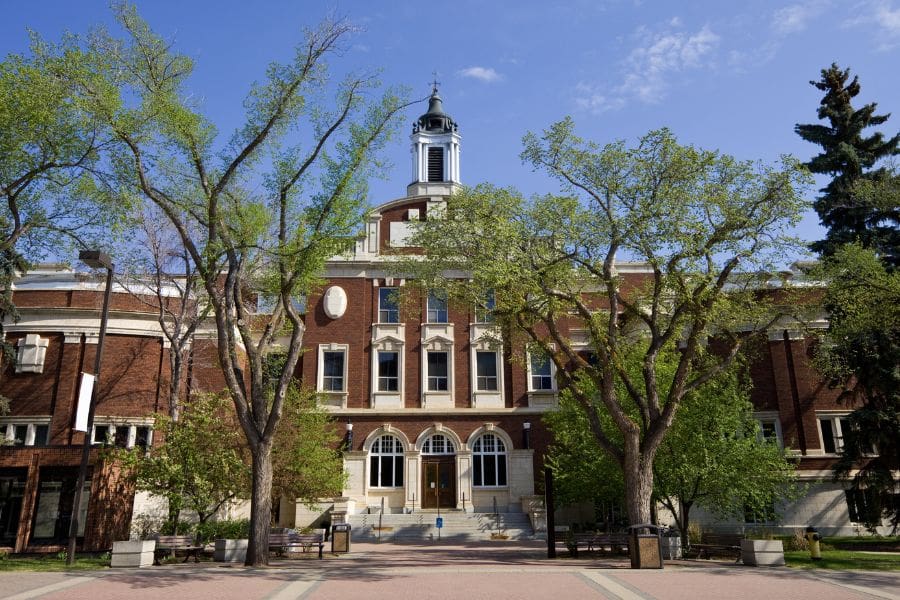
Public School Boards: Kindergarten – Grade 12 education is free for residents. Families can choose Edmonton Public Schools (EPSB), the largest school division in the city or the Edmonton Catholic School Division (ECSD).
Specialized Programs: French Immersion is widely available. High school students can access International Baccalaureate (IB) and Advanced Placement (AP) streams at select locations.
Early Childhood: Under the Canada-Wide Early Learning and Child Care program, Alberta continues to expand $10-a-day licensed childcare spaces and preschool options, including the Catholic board’s popular “100 Voices” pre-kindergarten program, to support working families.
💡 Newcomer Tip: If your child is entering the Canadian system for the first time, you must register through the Welcome Centre (Assessment Centre). The centre will assess your child’s language proficiency to ensure they receive the appropriate support from day one. Read more in our guide, Schooling in Canada | A Look at the Education System.
University of Alberta (U of A): A global Top 110 university and a flagship research institution. The U of A is a cornerstone of Edmonton’s economy and is globally recognized for its medicine, engineering, and world-leading computing science programs (particularly in Artificial Intelligence via Amii).
MacEwan University: Located downtown, MacEwan focuses on undergraduate education, offering programs in business, nursing, and the arts within a modern, urban campus.
Northern Alberta Institute of Technology (NAIT): One of Canada’s leading polytechnic institutes. NAIT is the primary engine for advanced technology, business, and skilled trades training in Northern Alberta, with strong connections to local industries and employers.
To help you weigh your options, this 2026 Pros and Cons table balances Edmonton’s status as an affordability leader with its northern climate and changing job market.
| Feature | Pros (The Benefits) | Cons (The Challenges) |
| Economy | Higher Take-Home Pay: No PST and lower income tax brackets than most of Canada. | Energy Dependency: While diversifying, the economy still feels the ripples of global oil prices. |
| Housing | The Final Frontier: One of the last major cities where a single income can still buy a home. | Utility Costs: Heating costs in the winter can be high; budget for “Carbon Tax” adjustments. |
| Lifestyle | Festival City: 50+ festivals a year, including the world-class Fringe Festival. | The “Deep Freeze”: January/February can see temperatures hit -35°C for weeks at a time. |
| Nature | The River Valley: 20 times the size of New York’s Central Park. | Distance: Edmonton is isolated; it’s a 3-hour drive to the Rockies (Jasper). |
The Soul of the City: Edmonton’s identity is built on DIY culture. From the Art Gallery of Alberta (AGA) to the ICE District (home to the Oilers), there is a gritty, “can-do” spirit.
Newcomer Day: Held annually at City Hall, celebrating the diverse fabric of the city, which is home to one of Canada’s largest Indigenous populations and vibrant Lebanese, Punjabi, and Somali communities.
Shopping: West Edmonton Mall remains a major employer and a winter sanctuary, featuring an indoor waterpark, ice rink, and hundreds of stores.

The River Valley and William Hawrelak Park: The River Valley is 20 times larger than New York’s Central Park and features over 160 kilometers of trails. In the summer, it is a hub for paddleboarding, canoeing, and picnics. In the winter, the parks transform into a wonderland for outdoor ice skating, snowshoeing, and crisp walks under bright blue skies.
The Festival Capital in the Park: Edmonton uses its massive park spaces to host world-famous outdoor events. During winter, Hawrelak Park and Borden Park feature stunning ice sculptures and the Silver Skate Festival, proving that the city’s outdoor lifestyle does not stop when the temperature drops.
Muttart Conservatory: Edmonton’s iconic glass pyramids house thousands of unique plant species from all over the world. Divided into different climates, the conservatory features indoor tropical and desert biomes that provide a perfect, warm escape from the cold Alberta winters.
Edmonton is welcoming with a strong community spirit and offers cultural programming and support for everyone who moves here.
Newcomer Day: The city hosts an annual Newcomer Day at City Hall, and features a citizenship ceremony, a community services fair, and cultural performances. The event officially welcomes those who have recently chosen to call Edmonton their new home and connects them with local resources.
Multicultural Festivals: Edmonton hosts massive celebrations at Hawrelak Park and Borden Park. The Heritage Festival celebrates the city’s multi-ethnic roots every August, showcasing food, dance, and crafts from over 100 different cultures. You can also explore local food and music at vibrant neighbourhood street festivals throughout the summer. Discover exciting summer festivals in Canada in 2026.
Indigenous Connection: Newcomers can connect with the Indigenous history (Treaty 6 Territory) by visiting the Amiskwaciy Academy community events or participating in the annual Edmonton Traditional Pow Wow. These events offer an incredible look at the histories, cultures, and traditions of the First Nations and Métis peoples.


If your priority is financial stability and space, Edmonton is one of the best choices in Canada for 2026. While the winters require an adjustment, the “Alberta Advantage” of lower taxes and higher wages allows newcomers to build wealth and own a home much faster than in other metropolitan areas.
🏠 Ready to start your housing search? Browse vetted Edmonton rentals on Rentals for Newcomers today!
January can see “deep freezes” of -35°C. Proper winter gear is non-negotiable. But it’s very sunny even in winter.
Most newcomers find a car necessary for grocery shopping and commuting, especially if living in the South or West ends. However, the LRT is expanding.
Like any large city, Edmonton has areas with higher crime rates (typically concentrated in some downtown pockets). Residential areas like Aspen Gardens or Windermere consistently rank among the safest for families.
WRITTEN BY
Corinna Frattini
Senior Editor and Content Writer, Prepare for Canada
Corinna researches and writes content to help newcomers make informed decisions about housing, employment, banking, and aspects of settling in Canada. With a background in human resources and leadership development, her articles focus on how newcomers can continue their careers in Canada. Her writing combines research, practical guidance, and clear language to support newcomers on their journey.
© Prepare for Canada 2026
Best Edmonton Neighbourhoods for Newcomers to Live and Rent in 2026
Transit System in Edmonton Moves You Affordably